English (UK)
  简体中文
简体中文  Bahasa Melayu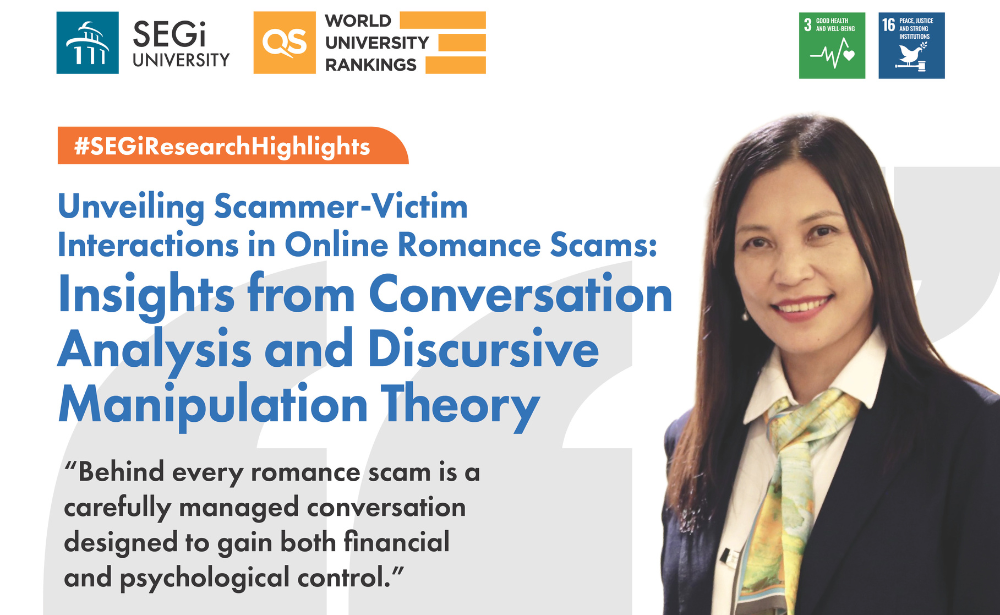
Online romance scams are often understood as financial crimes, but the emotional manipulation behind them is just as serious. Behind the affectionate messages, promises of love, and carefully timed requests, scammers often use calculated communication strategies to gain trust and control.
This issue is explored in a study by Dr Lee Kam Fong, Senior Lecturer from the Faculty of Education, Languages, Psychology and Music, titled Unveiling Scammer-Victim Interactions in Online Romance Scams: Insights from Conversation Analysis and Discursive Manipulation Theory.
The study examines genuine scam communications to understand how scammers build emotional dependence, create a sense of intimacy, and gradually pressure victims into compliance. Using Conversation Analysis and Discursive Manipulation Theory, the research highlights how language can become a powerful tool of manipulation.
Rather than relying on a single request for money, scammers often manage conversations carefully over time. They use emotional reassurance, persuasive wording, and psychological pressure to make victims feel connected, responsible, and eventually trapped. This shows that romance scams are not only about financial loss, but also about emotional control and psychological harm.
The findings offer important insights into digital safety awareness, scam prevention, online communication education, and public understanding of how manipulation can take place through everyday conversations.
By analysing the words exchanged between scammers and victims, the study reminds us that behind many romance scams is not just a fake relationship, but a carefully managed script designed to exploit trust.